
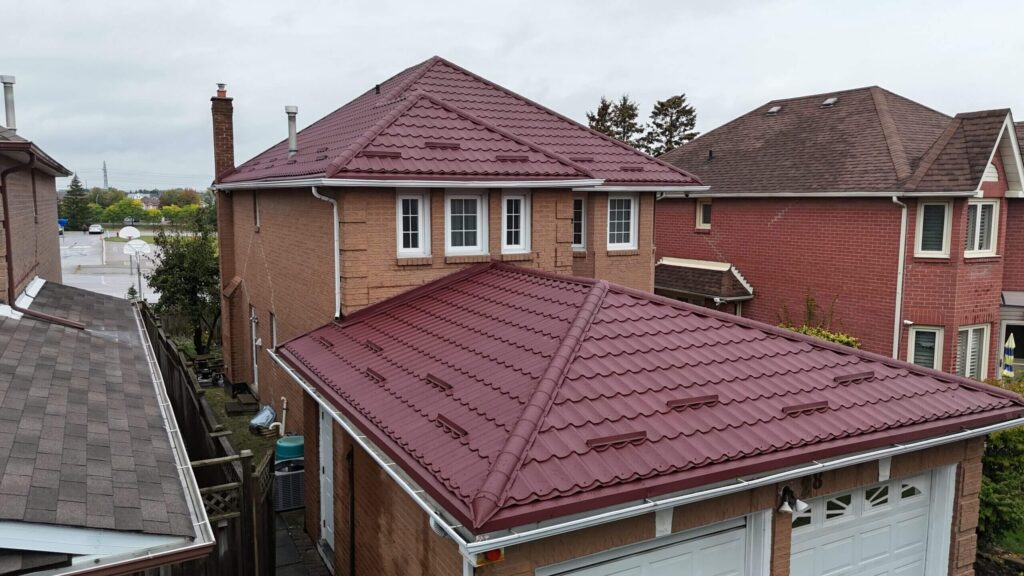
One of the biggest advantages of metal roofing over asphalt shingles is dramatically reduced maintenance. However, low maintenance does not mean zero maintenance. A metal roof that is properly maintained will last 50+ years—and the good news is that maintaining a metal roof in Ontario requires very little time and effort compared to other roofing materials. This complete guide tells you exactly what to check, when to check it, and what to watch out for.
Why Metal Roofing Requires So Little Maintenance
Metal roofing is fundamentally different from asphalt shingles in terms of how it ages. Asphalt shingles gradually deteriorate from day one—losing granules, cracking from UV exposure, lifting from wind, and absorbing moisture. Every year an asphalt shingle roof exists; it is slightly worse than the year before.
Metal roofing doesn’t work this way. Properly installed metal panels don’t crack, curl, lose protective coatings, or absorb moisture. The protective coating on quality metal roofing is designed to last decades without significant degradation. This is why the maintenance requirements are so dramatically different.
Annual Metal Roof Inspection: What to Check
We recommend Ontario homeowners do a simple visual inspection of their metal roof once per year—ideally in spring after winter is over. Here’s exactly what to look for:
Panel Condition
Walk around your home and look up at all visible roof surfaces. You’re looking for:
Dents or deformation—severe hail can dent metal panels, though modern metal roofing is engineered to withstand standard Ontario hail events. If you notice significant denting after a severe storm, have a professional assess the extent.
Paint or coating damage—if you notice areas where the paint or protective coating appears scratched, chipped, or worn, these areas can be touched up with appropriate touch-up paint to prevent any corrosion.
Loose panels—in very rare cases, panels can become partially detached by extreme wind events. Walk around and look for any panels that appear raised or displaced.
Flashings and Seals
The most common source of metal roof issues is not the panels themselves but the flashings around penetrations—chimneys, vents, skylights, and roof edges. Inspect:
Chimney flashing—look for gaps, rust staining, or separation between the flashing and chimney brickwork.
Vent pipe flashing—the rubber boots around vent pipes degrade faster than metal panels. Check for cracking or separation.
Skylight flashing—inspect the perimeter of all skylights for any gaps or separation.
Ridge cap—look along the ridge of the roof to confirm the ridge cap is fully secured and sealed.
Gutters and Drainage
Proper drainage is important for any roofing system. Check:
Gutters are clear of debris—leaves and debris in gutters can cause water backup that affects the roof edge.
Downspouts are clear and directing water away from the foundation.
No standing water on flat or low-slope sections—if your home has any flat sections, confirm water is draining properly.
Surrounding Trees and Vegetation
Trim any tree branches that overhang or contact your metal roof. Branches rubbing against metal panels can scratch the protective coating over time. Falling branches from trees above can also cause denting or damage in severe storms.
Post-Winter Inspection: Ontario Specific
Ontario winters are hard on all roofing systems. After each winter, specifically check:
Ice dam residue—while metal roofing dramatically reduces ice dams, inspect the roof edge and gutters for any residual ice buildup or damage from any ice that did form.
Fastener condition—on exposed fastener systems, check that all visible fasteners are still properly seated and that the rubber washers under fastener heads are not compressed or cracked.
Snow guard condition—if your metal roof has snow guards installed, confirm they are all secure and undamaged after winter.
What NOT to Do: Common Metal Roof Maintenance Mistakes
There are several things homeowners should avoid when it comes to metal roof maintenance:
Don’t walk on metal roofing unnecessarily—while metal roofing can support foot traffic for maintenance purposes, unnecessary walking can dent panels or compress seams. Always use appropriate walking boards if roof access is required.
Don’t use pressure washers—high-pressure water can damage protective coatings and force water under panels. A gentle rinse with a regular garden hose is appropriate for cleaning if needed.
Don’t use abrasive cleaning products—if cleaning is needed, use mild soap and water only. Abrasive cleaners can scratch protective coatings.
Don’t ignore dissimilar metals—if any repairs involve metal components, ensure they are compatible with your existing metal roofing material. Dissimilar metals in contact can cause galvanic corrosion over time.
Don’t attempt major repairs yourself—metal roofing repairs, particularly around flashings, require experience and appropriate materials. Improper repairs can void warranties and cause more problems than they solve.
When to Call a Professional
While annual visual inspections can be done by homeowners, some situations warrant calling a professional metal roofing contractor:
After severe hail or wind events, have a professional assess the extent of any storm damage before making an insurance claim.
If you notice any active leaks—water infiltration should be investigated immediately. Even a small leak can cause significant damage to roof decking and insulation if left unaddressed.
If flashings appear damaged or separated, proper flashing repair requires experience and appropriate materials.
Before the warranty expiration—many metal roofing manufacturer warranties require professional inspection at certain intervals. Check your warranty documentation for requirements.
Cleaning Your Metal Roof
Metal roofing generally stays clean naturally — rain washes the smooth surface effectively. However, in some situations cleaning may be beneficial:
Moss or algae growth — in shaded areas, particularly in humid microclimates, some moss or algae growth is possible on metal roofing. This can be treated with appropriate biocide products designed for metal roofing. Do not use bleach or chlorine-based products, as these can damage protective coatings.
Tree sap or bird droppings—these can be removed with mild soap and warm water. Address promptly, as prolonged contact can stain coatings.
Industrial fallout—in areas near industrial activity, fine particles can settle on roof surfaces. Annual rinsing with a garden hose is usually sufficient to remove these.
Metal Roof Lifespan: What to Expect
With proper maintenance as described in this guide, here’s what Ontario homeowners can expect from their metal roof:
0–10 years: Zero maintenance issues expected on a properly installed metal roof.
10–25 years: Annual inspections as described. Possibly replace vent pipe rubber boots.
25–50 years: Continue annual inspections. Touch up any coating chips. Inspect and potentially replace sealants around flashings.
50+ years: A properly maintained metal roof can continue performing well beyond 50 years.
Compare this to asphalt shingles, which require full replacement every 12–15 years in Ontario—the difference in lifetime maintenance burden is enormous.
Professional Metal Roof Inspection Services
At VR Metal Roofing, we offer professional inspections for metal roofing systems across the GTA. Whether you’ve recently purchased a home with an existing metal roof, are approaching warranty expiration, or simply want peace of mind after a severe weather event, our experienced team can assess your roof’s condition and address any issues.
We proudly serve homeowners across Mississauga, Vaughan, Scarborough, Brampton, Etobicoke, Markham, Richmond Hill, Oakville, Burlington, and Milton.
📞 +1 (647) 262-9203
📞 +1 (647) 862-8085
✉️ info@vrmetalroofing.ca