
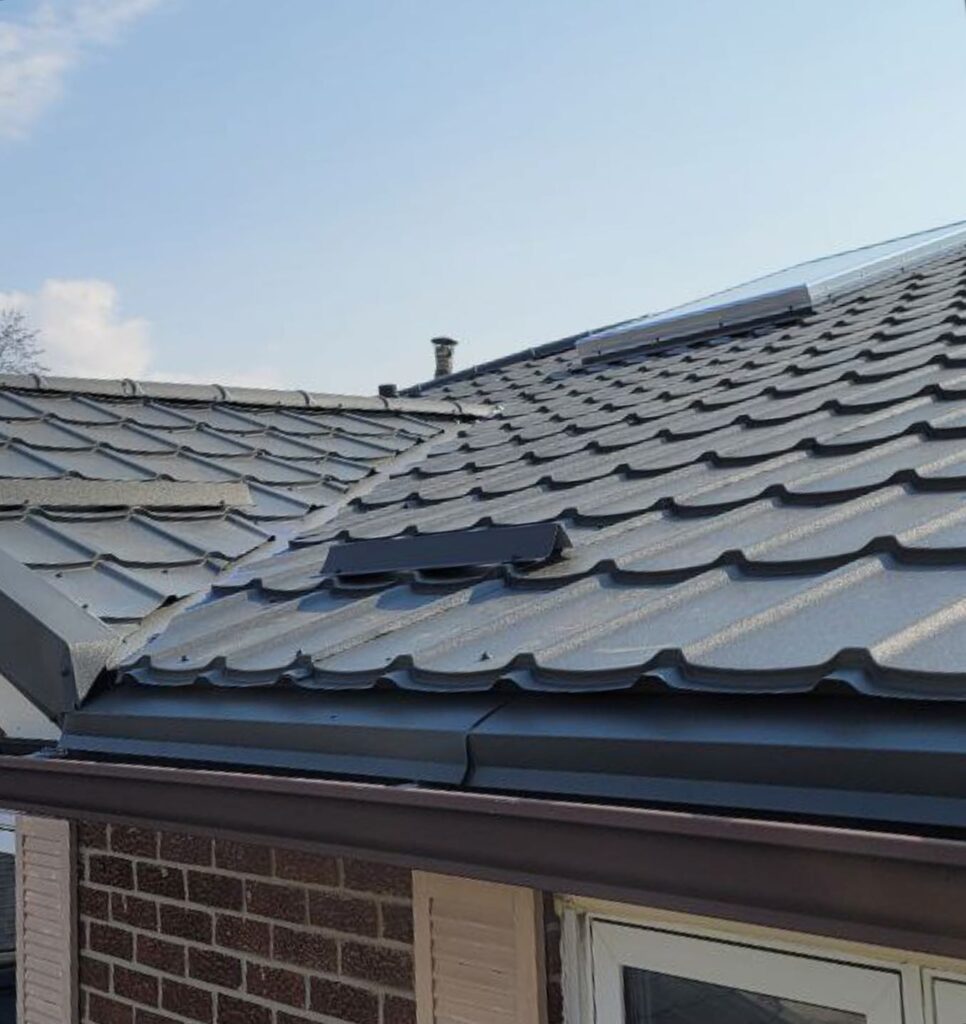
Ontario winters are among the most demanding roofing conditions in the world. Freeze-thaw cycles, heavy snow loads, ice dams, and extreme temperature swings all take their toll on roofing systems—and understanding how your metal roof handles winter conditions is important for every GTA homeowner. This complete guide covers everything you need to know about metal roofing and Ontario winters.
How Metal Roofing Handles Ontario Winter Conditions
Metal roofing is specifically engineered to excel in exactly the conditions that Ontario winters deliver. Here’s how each winter challenge affects metal roofing:
Snow Accumulation
Snow behaves very differently on metal roofing compared to asphalt shingles. The smooth, low-friction surface of metal panels allows snow to slide off naturally once it reaches a critical mass—typically before the weight becomes significant.
This natural snow shedding is one of metal roofing’s most practical advantages in Ontario. While asphalt shingle roofs can accumulate heavy snow loads that stress the roof structure and contribute to ice dam formation, metal roofs shed snow continuously throughout winter storms.
Important note: while snow shedding is generally beneficial, homeowners should be aware of where snow will land when it slides off. Areas below roof edges—walkways, driveways, and entrances—can receive sudden snow slides. Snow guards can be installed on metal roofing to control where and how snow releases.
Ice Dams
Ice dams are one of the most destructive winter roofing problems in Ontario. They form when heat escaping through the roof melts snow, which then refreezes at the cold roof edge—creating a dam that forces water back under the roofing material.
Metal roofing dramatically reduces ice dam formation through two mechanisms:
First, the smooth metal surface allows melting snow to run off quickly before it can refreeze at the edge.
Second, metal roofing’s thermal properties—combined with proper underlayment and ventilation—reduce the differential between the warm upper roof and cold roof edge that causes ice dam formation.
While metal roofing doesn’t eliminate ice dams entirely in all situations—particularly on roofs with inadequate attic ventilation—it reduces them dramatically compared to asphalt shingles.
Freeze-Thaw Cycles
Ontario experiences hundreds of freeze-thaw cycles every winter—temperatures that swing above and below freezing repeatedly. This is devastating for asphalt shingles, which expand and contract with each cycle, gradually cracking and lifting.
Metal roofing is specifically designed to handle thermal expansion and contraction. Quality metal roofing systems incorporate expansion allowances in their fastening and panel design—the panels move slightly as temperatures change without any damage to the system.
Heavy Snow Loads
Metal roofing’s lightweight nature—typically 1.5–3 pounds per square foot—means the roof structure carries less weight before any snow load is added. Combined with the natural snow-shedding properties of metal panels, this means metal roofs typically carry significantly less accumulated snow load than equivalent asphalt shingle roofs.
Preparing Your Metal Roof for Winter in Ontario
While metal roofing requires minimal preparation for winter, there are some smart steps GTA homeowners can take before cold weather arrives:
Pre-Winter Inspection Checklist
Complete a visual inspection in late September or October—before temperatures drop significantly:
Check all flashings—inspect chimney flashing, vent pipe flashing, skylight flashing, and roof edge details. Look for any gaps, separations, or deterioration that could allow water infiltration when snow melts.
Clear gutters completely—remove all leaves and debris from gutters before winter. Full gutters prevent proper drainage of melting snow and can contribute to ice backup at the roof edge.
Check downspouts—confirm all downspouts are clear and directing water away from the foundation. Blocked downspouts cause water to back up and potentially freeze in the gutter system.
Trim overhanging branches—branches that contact or overhang your metal roof can deposit debris, scratch protective coatings, and in severe winter storms can fall and cause damage.
Check attic ventilation—adequate attic ventilation is critical for preventing ice dams. Confirm soffit vents are not blocked by insulation and ridge vents are clear.
Snow Guards: Do You Need Them?
Snow guards are devices attached to metal roofing that control how and where snow releases from the roof surface. They don’t prevent snow from sliding—they break it into smaller amounts that release gradually rather than all at once.
Consider snow guards if:
Your roof overhangs a frequently used entrance, walkway, or driveway where sudden snow slides would be dangerous.
Your property has pedestrian areas directly below roof edges.
Local by-laws or building codes require snow retention systems in your area.
Snow guards are a standard accessory for metal roofing installations and can be added to existing metal roofs at any time.
During Winter: What to Monitor
During the winter months, monitor your metal roof periodically:
After major snowfall events, observe how snow is releasing from your roof. Natural sliding is normal and expected.
After ice storm events—if freezing rain or ice storms occur, check roof edges and gutters for unusual ice buildup. Some ice at roof edges can occur even with metal roofing during severe ice storm events.
If you notice active leaks or water stains, investigate immediately. Even small leaks should be addressed promptly to prevent damage to roof decking and interior spaces.
What NOT to Do During Winter
Never use a metal rake or sharp-edged tool on your metal roof—these can scratch and damage the protective coating.
Don’t attempt to chip ice from a metal roof—this risks personal injury and roof damage.
Don’t use salt products on metal roofing—some ice-melt products can damage metal coatings. If de-icing is needed in gutters, use products specifically approved for use with metal roofing.
Don’t walk on a snow- or ice-covered metal roof—this is extremely hazardous. Any winter maintenance requiring roof access should be done by experienced professionals with appropriate safety equipment.
Post-Winter Inspection
After winter ends—typically in March or April—do a post-winter inspection:
Check for any dents from ice or hail events.
Inspect all flashings for any movement or gaps that may have developed.
Clear any remaining debris from gutters and downspouts.
Look for any scratches in the metal coating that should be touched up.
Check snow guard attachment points if applicable.
Metal Roofing vs. Asphalt Shingles in Ontario Winter: The Real Comparison
For Ontario homeowners still on asphalt shingles, winter is when the differences become most apparent. Every winter, asphalt shingle roofs across the GTA experience:
Ice dam damage that forces water under shingles and into the home.
Shingle cracking and lifting from freeze-thaw cycles.
Granule loss accelerated by winter conditions.
Nail pops from expansion and contraction.
Metal roofing eliminates all of these issues—delivering consistent, worry-free performance through even the harshest Ontario winters.
Getting Ready for Winter with a New Metal Roof
If your current asphalt shingle roof is showing signs of winter-related deterioration—cracking, lifting, ice dam damage, or multiple repairs—now is the time to consider metal roofing before another Ontario winter arrives.
At VR Metal Roofing we offer free online estimates for most GTA homes—and we can assess your current roof’s condition and provide transparent pricing quickly. Don’t wait for winter damage to make the decision for you.
We proudly serve homeowners across Mississauga, Vaughan, Scarborough, Brampton, Etobicoke, Markham, Richmond Hill, Oakville, Burlington, and Milton.
📞 +1 (647) 262-9203
📞 +1 (647) 862-8085
✉️ info@vrmetalroofing.ca