
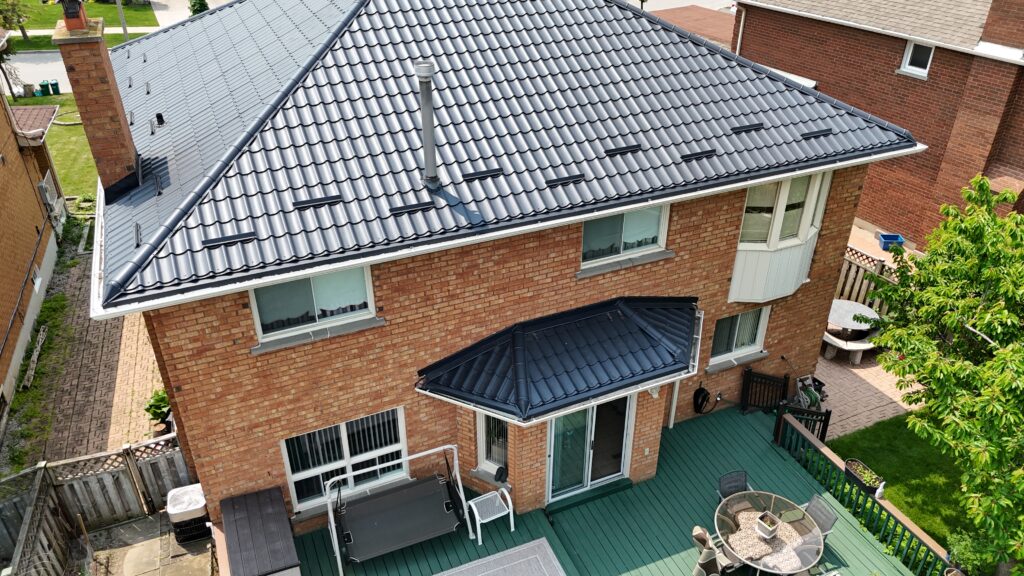
If you’re a homeowner in Ontario, you’ve almost certainly dealt with ice dams—or know someone who has. Ice dams are one of the most common and damaging winter roofing problems across the GTA, causing leaks, water damage, and costly repairs every year.
The good news is that metal roofing is one of the most effective solutions to the ice dam problem. In this guide we explain exactly what ice dams are, why they form, how metal roofing prevents them, and why more Ontario homeowners are making the switch.
What Are Ice Dams?
An ice dam is a ridge of ice that forms at the edge of a roof—typically at the eaves—preventing melting snow from draining off the roof properly. When water backs up behind the ice dam, it can seep under roofing materials, causing leaks and water damage to insulation, ceilings, walls, and, in severe cases, structural damage.
Ice dams are particularly common in Ontario due to the climate—cold winters with heavy snowfall combined with warm spells that cause partial melting create the perfect conditions for ice dam formation.
Why Do Ice Dams Form?
Ice dams form when heat escapes from the interior of your home through the roof, warming the roof surface and melting the snow above. The meltwater runs down the roof toward the eaves—which are colder because they extend beyond the heated living space—and refreezes, forming the ice dam.
The cycle continues as more snow melts and more water backs up behind the growing ice dam. Eventually the water finds its way under shingles, through underlayment, and into your home.
The root causes of ice dams are the following:
Insufficient Insulation: When heat escapes through the ceiling into the attic, it warms the roof deck unevenly. Better insulation keeps heat inside the living space where it belongs.
Poor Ventilation Proper attic ventilation keeps the roof surface cold and uniform—preventing the uneven warming that causes ice dams. Without adequate ventilation, warm air accumulates in the attic and warms the roof deck.
Heavy snowfall, deep snow on the roof, provides more material for the ice dam cycle. The more snow, the greater the potential for ice dam formation.
Roof Design Complex roofs with multiple valleys, dormers, and roof sections that intersect at different angles create areas where snow accumulates and drainage is restricted—increasing ice dam risk.
Why Asphalt Shingles Are Vulnerable to Ice Dams
Asphalt shingles are particularly vulnerable to ice dam damage for several reasons:
Rough Surface: The granular texture of asphalt shingles grips snow and ice, slowing its natural movement off the roof. Snow stays on the roof longer, increasing ice dam risk.
Low Resistance to Water Infiltration When ice dams force water to back up under asphalt shingles, the water finds its way through easily. Shingles are designed to shed water flowing downward — they’re not designed to resist water being pushed upward or sideways.
Expansion and Contraction Damage The repeated freeze-thaw cycles that accompany ice dam formation cause asphalt shingles to crack, curl, and deteriorate faster. Each ice dam event causes additional damage that shortens the roof’s lifespan.
Already Aging Faster in Ontario: Ontario’s harsh climate means asphalt shingles already have a shorter lifespan than their marketed rating—typically 12–15 years in our climate. Ice dam damage accelerates this deterioration further.
How Metal Roofing Prevents Ice Dams
Metal roofing addresses the ice dam problem in several important ways:
Smooth Surface Sheds Snow Naturally Metal roofing has a smooth surface that allows snow to slide off naturally rather than accumulating. Less snow on the roof means less material for ice dam formation. In many cases snow slides off a metal roof before it even has a chance to melt and refreeze.
No Granule Texture to Grip Snow Unlike asphalt shingles, metal roofing has no rough granular surface to hold snow in place. The slick metal surface combined with the sun’s warmth causes snow to release and slide off in sheets—dramatically reducing accumulation.
Superior Water Resistance Metal roofing with quality underlayment creates a much more water-resistant barrier than asphalt shingles. Even if some water backs up due to ice formation at the eaves, a properly installed metal roof with ice and water shield underlayment prevents infiltration into the home.
Consistent Thermal Performance Metal roofing doesn’t absorb heat the way asphalt shingles do. The consistent thermal properties of metal roofing, combined with proper ridge ventilation, help maintain a more uniform roof surface temperature—reducing the uneven warming that causes ice dams.
Compatible with Ridge Venting Proper ridge venting—which keeps the attic cold and uniform—works extremely well with metal roofing systems. The combination of metal roofing and proper ridge ventilation is one of the most effective ice dam prevention strategies available.
Additional Ice Dam Prevention Strategies
While metal roofing significantly reduces ice dam risk, the most effective approach combines roofing material with proper building practices:
Improve Attic Insulation Adding insulation to your attic floor prevents heat from escaping into the attic and warming the roof deck. This addresses the root cause of ice dam formation.
Ensure Proper Attic Ventilation: Ridge vents, soffit vents, and proper air circulation keep the attic temperature consistent and close to outdoor temperatures, preventing the warm spots that cause uneven melting.
Install Ice and Water Shield Underlayment A quality ice and water shield underlayment installed along the eaves and in valleys provides an additional waterproof barrier even if ice dams do form.
Address Thermal Bridges: Areas where structural elements like rafters or attic hatches allow heat to escape create warm spots on the roof. Addressing these thermal bridges improves overall roof performance.
Real Benefits Ontario Homeowners Experience After Switching to Metal
Homeowners across the GTA who have switched from asphalt shingles to metal roofing consistently report:
- Dramatically less snow accumulation on the roof
- Significantly reduced or eliminated ice dam formation
- No more water stains on ceilings after winter storms
- Lower stress during heavy snowfall events
- No need for roof rakes or ice removal—the roof handles it naturally
Is Metal Roofing Worth It for Ice Dam Prevention Alone?
Even if ice dam prevention were the only benefit of metal roofing — which it isn’t — the investment would be justified for many Ontario homeowners. The cost of ice dam damage over the lifetime of an asphalt roof can be significant—water damage repairs, insulation replacement, ceiling repairs, and mold remediation all add up quickly.
When you factor in the 50+ year lifespan, zero maintenance, energy efficiency, and complete elimination of ice dam risk, metal roofing is one of the smartest investments an Ontario homeowner can make.
VR Metal Roofing is a family-run metal and steel roofing contractor proudly serving Mississauga, Vaughan, Scarborough, Brampton, Etobicoke, Markham, Richmond Hill, Oakville, Burlington, Milton, and the surrounding Greater Toronto Area within 150 km.
Contact us today for a free online estimate—just provide your full address, including postal code.
📞 +1 (647) 262-9203 📞 +1 (647) 862-8085 ✉️ info@vrmetalroofing.ca